
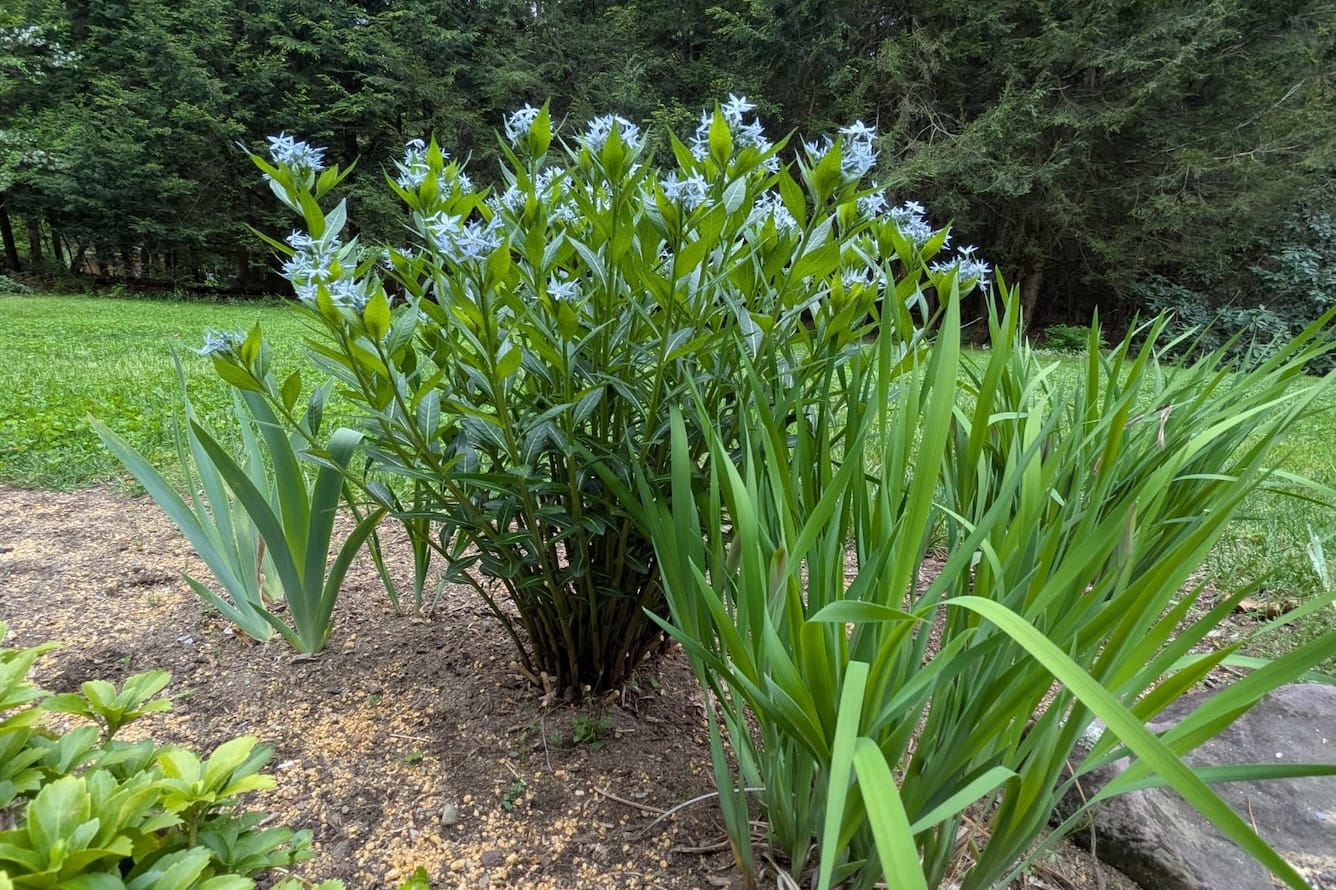
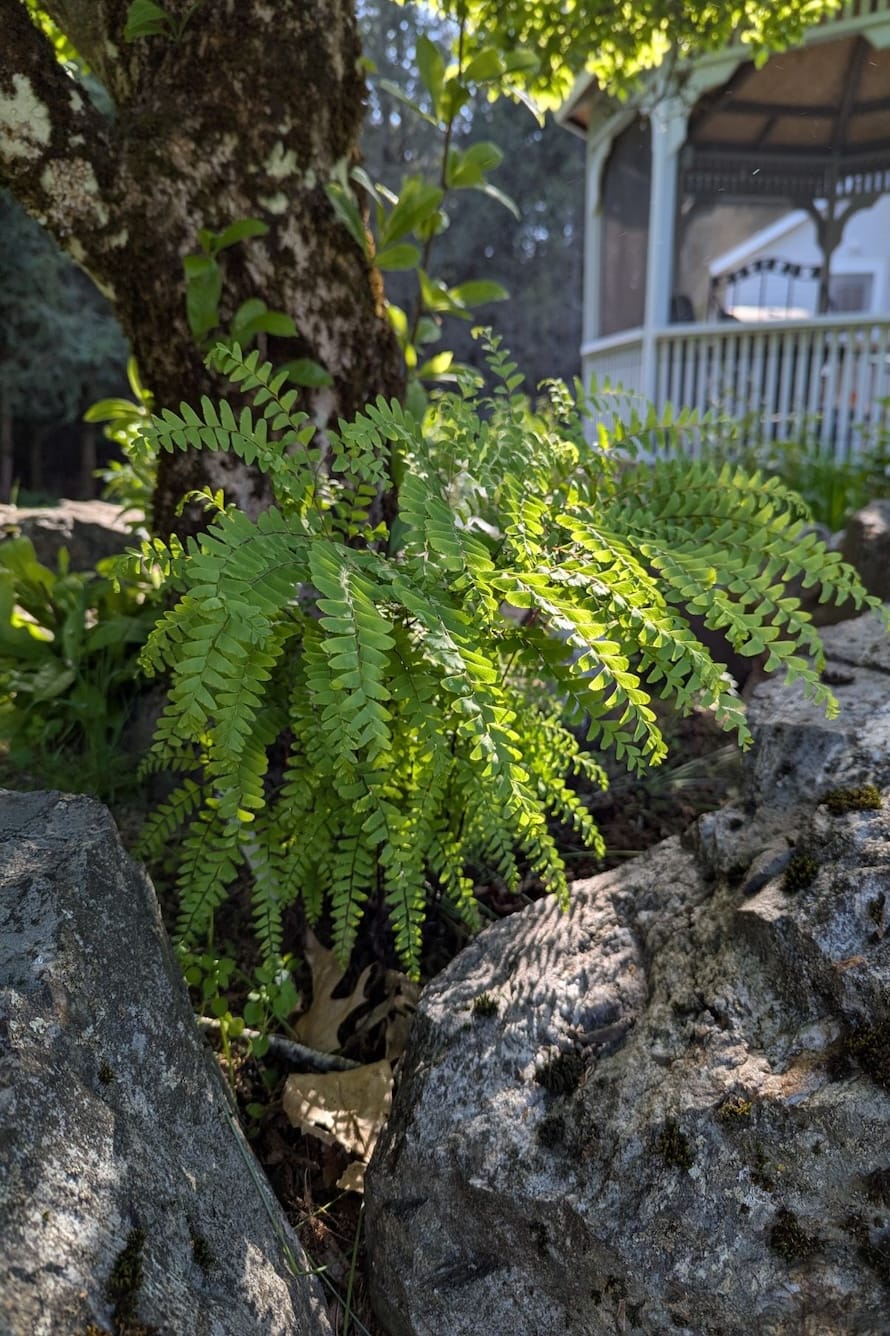
First garden report of the spring? Let’s dig in! It’s mid-May and already we are saying goodbye to the dazzling blooms of daffodils, creeping phlox, crabapples, and tulips (though, I have a few stubborn Queen of the Night tulips that are hanging on even through this heat). My peonies are budding beautifully, along with my Blue Ice amsonia (a lovely native plant of New Hampshire), and ferns and decorative grasses are starting to come into their own.
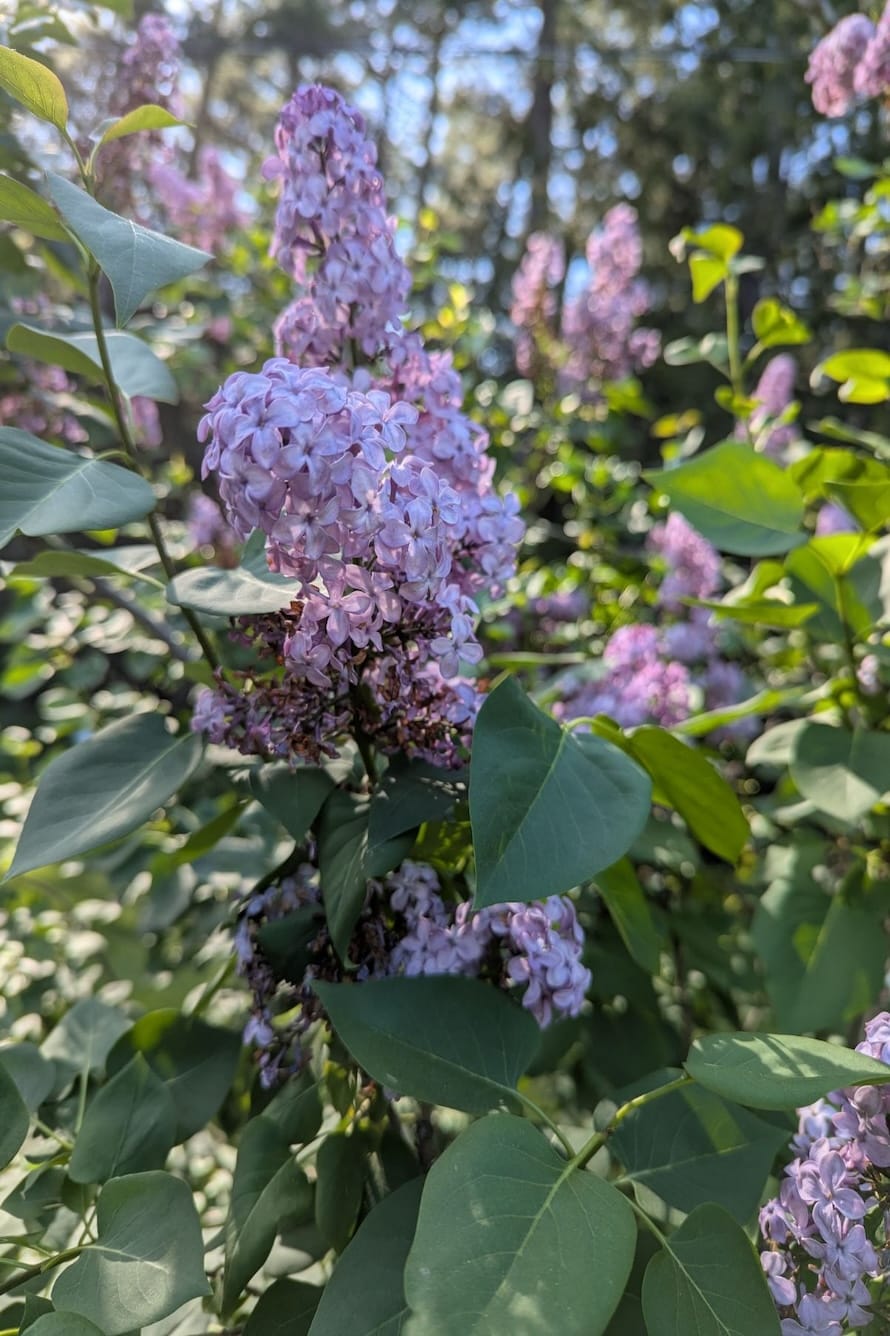
I have noticed a lackluster year for our state flower, the purple lilac, where the blooms are struggling. I suspect that the difficult winter, coupled with the drought conditions and rodent damage (at least on mine), are at least partially responsible for the conditions noted. Also spotted in the perennial beds, though many have gone to seed, hairy bittercress is still lurking–get these guys out, they spread very aggressively (but, they are easy to pull by hand). Another common weed to note is the currently-blooming wild violet; this plant is tough to control and root out (its root system is rather insidious).
But let’s get to what everyone is talking about: the heat wave! Tuesday and Wednesday have been absolutely brutal. Signs of heat stress abound in plant life, and it makes me suspect that we might be in for another hot, dry summer. According to the NIDIS, Hillsborough County remains in moderate drought conditions. With this in mind and my rising concern of a dry growing season, here is my current plan:
● Plant with products like Soil Moist Natural, which help retain moisture at the root of your plants.
● Thorough mulching: a few inches of straw around my vegetables, and bark mulch in my perennial beds.
● Plant veggies and annuals in wells (have the plant sunken down with a dam around it) to help hold water.
● Consider using drip irrigation or soaker hoses to keep things watered, while helping conserve water (I also water by hand at the base of plants to help prevent disease).
I f we have a wet growing season, this plan could go awry, but it’s a chance I am willing to take–if only to conserve water.
Next up is fertilizing! Make sure you take the last opportunity to fertilize some of your woody, acid-loving plants (blueberries, rhododendrons, etc.). There is still plenty of time to fertilize your perennial flowers, and I am planning a good application of natural liquid fertilizer with high nitrogen for my shallots (also great for onions, garlic, and leeks). I’d also suggest an application of natural fertilizer for your lawn at the end of May.
Pests are sure to be on the rise soon, as well as burgeoning disease. Here are a few things to look out for:
● Cabbage looper: a white moth that lays eggs on the brassicus family (broccoli, brussel sprouts, etc.). These green caterpillars decimate plants. I suggest bacillus thuringiensis (also known as B.T.) as a natural solution.
● Mosquitos and ticks are out in force. Be sure to take precautions with these blood suckers. Do tick checks on yourselves and your furry companions.
● Poison ivy: they are growing with vigor on roadsides, and I have even found an outlier or two in my perennial bed.
● It’s a little early, but keep an eye out for Lily Leaf Beetle. These bright red beetles can do so much damage on true lilies.
Some final notes, if you are looking for something fun to do this Saturday, join us at Nashua Farmers’ Exchange Inc., for a Native Plant Seminar at 10 AM. Our good friend, Barb Young of The Big Little Garden, is hosting this talk and a limited supply of native plants will be available. Come and learn with us!
Looking for more plants and a great cause? Barb and her amazing co-volunteers are hosting a plant sale on May 30th to support Community Hospice House in Merrimack, NH.These hardworking folks are responsible for the stunning gardens located at Community Hospice House.
With Memorial Day weekend coming, it’s traditional in this region to get warm-weather veggies and annuals into the ground. Be sure to have a little fun and play in the dirt this weekend!
Kate Ratta is the manager of the local feed store Nashua Farmers' Exchange, Inc. She has more than 10 years of experience working in the business owned by her aunt and uncle, Judy Ratta-Harrington and Gene Harrington, and will be contributing weekly garden reports. The store is located at 38½ Bridge Street in Nashua in the converted Boston & Maine and Concord Railroad station.