
What’s the dirt? Well, it’s been hot, smokey, and oh-so-humid. Weeds have been flourishing–they aren’t as picky water-wise and don’t mind heat as much. My lawn is a little crispy (I don’t water typically in an attempt to conserve), but the clover that I planted is green as can be and the bees love it! Clover fixes its own nitrogen, so it stays happy and green in less-than-ideal conditions, especially when compared to turf grasses.
If you planted garlic last Fall, it’s probably getting close to harvest time! Keep an eye on it. How do you know it’s ready? The foliage will brown and flop over. Now you can pull them! To store them, brush the soil from the bulb (no need to scrub it clean), and let them dry for a couple day in the sun. Dry inside your home if it’s raining! It’s important to let them cure properly or they will rot too soon–no garlic through the winter if this happens! For full garden planting and harvesting instructions, click here!
As far as plantings go–I found some flower and pepper seedlings that I had neglected to plant. Milkweed, hollyhock, exotic love vine, celosia! I’m not sure how they will fare (especially the peppers) because I got them in the ground so late, but they fought so hard to live! I have to plant them and give them a fighting change.
Aside from these new plantings, I’m in a bit of a holding pattern in the veggie garden. July is more about maintaining and sorting through pests and disease. I keep an eye on the watering. Does anybody need fertilizer? I scout for pests and disease and treat them accordingly. Keep weeding! Woof. This is the hard part of the season for me—it’s hard to be motivated when it’s hot outside and I’m impatient for a harvest! But the reward of homegrown vegetables is completely worth it.
As for pests in the garden, of course, Colorado potato beetle (the 2nd generation is at my house), leaf hoppers, flea beetle! I have also heard reports of squash bugs from friends. These guys are nasty and can infect plants with disease. The ticky part with them is that they have beak-like mouth parts and suck, rather than chew on the plant. This means spinosid won’t work as effectively for control. I use neem oil if they are physically present or their egg masses are present. I highly recommend checking the topside and underside of the foliage, and on the fruit of the plant for these buggers. Squish ‘em when you see them!
At the store, we had reports of powdery mildew on squash plants as well. Powdery mildew is a white fungus that appears on the topside of the foliage. This occurs frequently with humid weather and isn’t something to be overly worried about. It can interfere with photosynthesis, but usually plants continue just fine. You can wipe it off, or you could use a fungicide if you want–I don’t bother with fungicide. If it’s downy mildew…this is a bad one. This white fungus appears on the underside of the foliage and can take down a plant. It would require a fungicide to treat it.
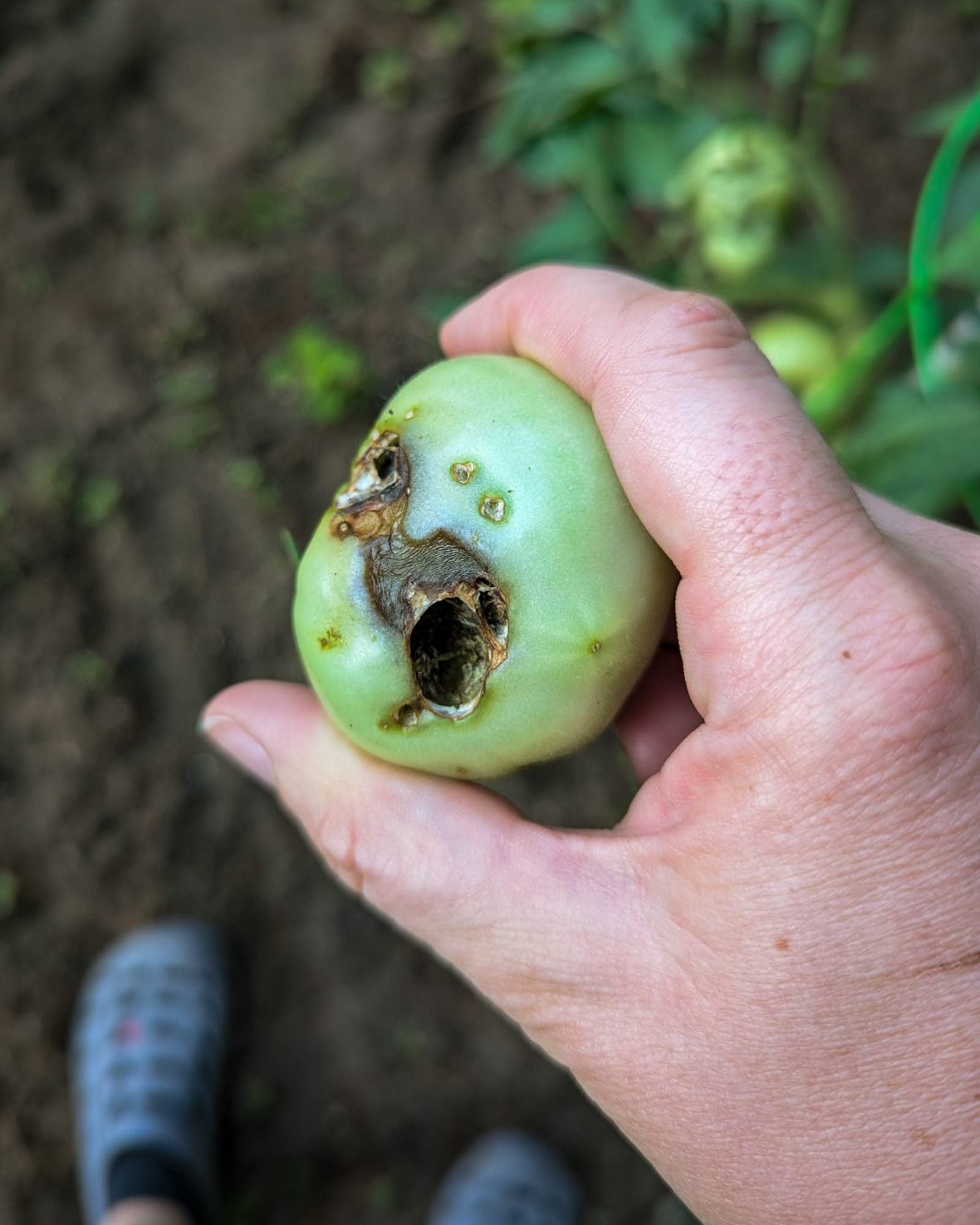
I also found a new problem on the fruits of my tomato plants! From afar, I thought it was blossom-end rot, but when I got closer, I wasn’t so sure. It appears like deep, dark wounds in the fruit. It’s possible that it’s a fruitworm (also known as cornear worm). Once fruitworm is inside the fruit, there isn’t much you can do, except to remove the infested fruit and destroy–don’t leave it around!
While this pest normally attacks corn, it can go for tomatoes. You would need to treat the plant before there was any issue. I would have used B.T. (bacillus thuringiensis) preventively for organic control. This all being said, I’m still not sure. I will cut open the fruit to see if there are any worms, and if there aren’t, I’m going to assume it’s blossom-end rot that progressed quickly on these particular tomatoes.
Blossom-end rot is simply a calcium deficiency in the plant. If this does turn out to be blossom-end rot, I will spray the foliage of my tomatoes with a liquid calcium to give the next fruits a better chance of developing without the rotted bottom. This will not cure the fruits that already have the rot. Additionally, while I plant with Tomato-Tone fertilizer, which contains calcium, I have not used a high calcium lime in this garden bed for a while. In the Fall after I put the gardens to bed, I will apply some of the lime.
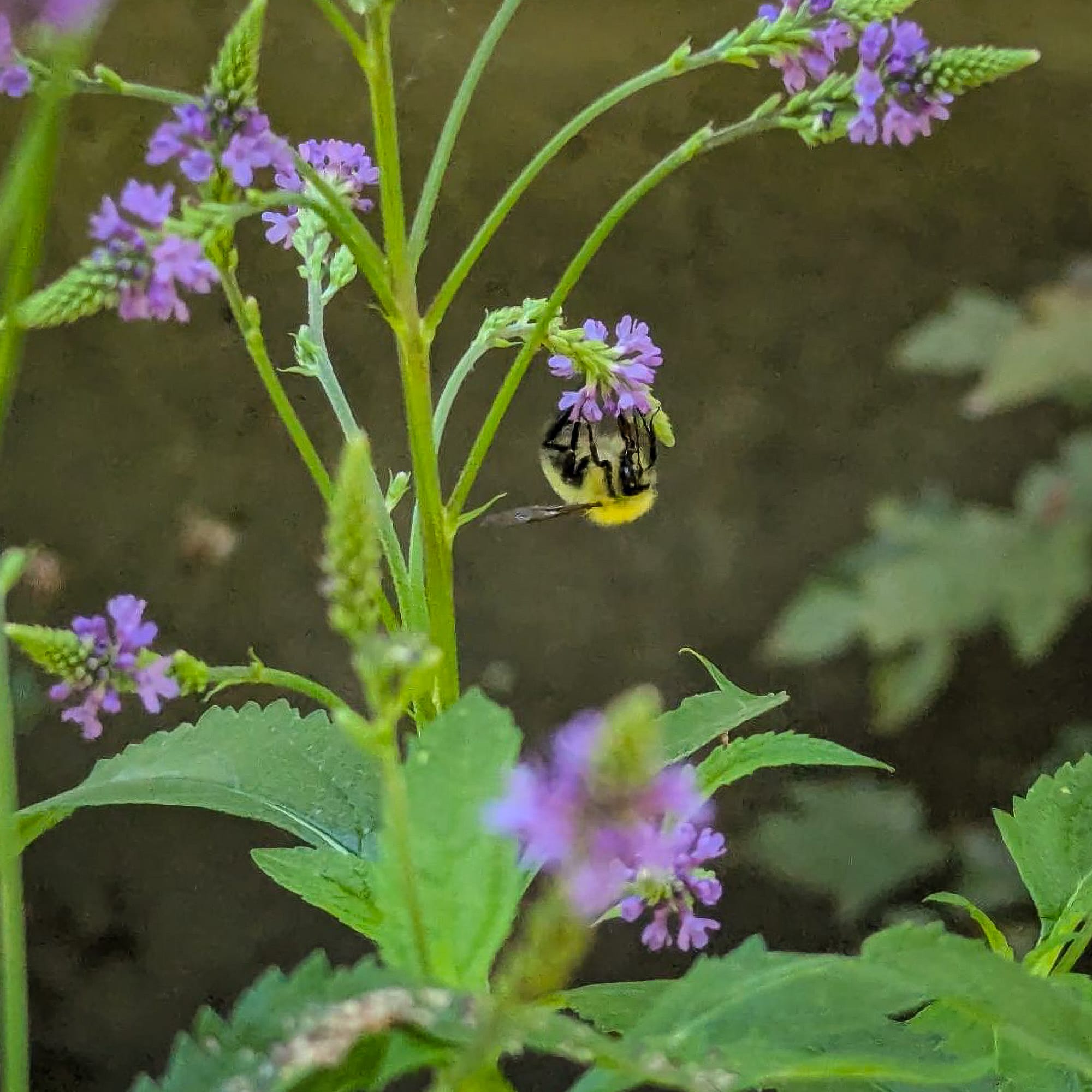
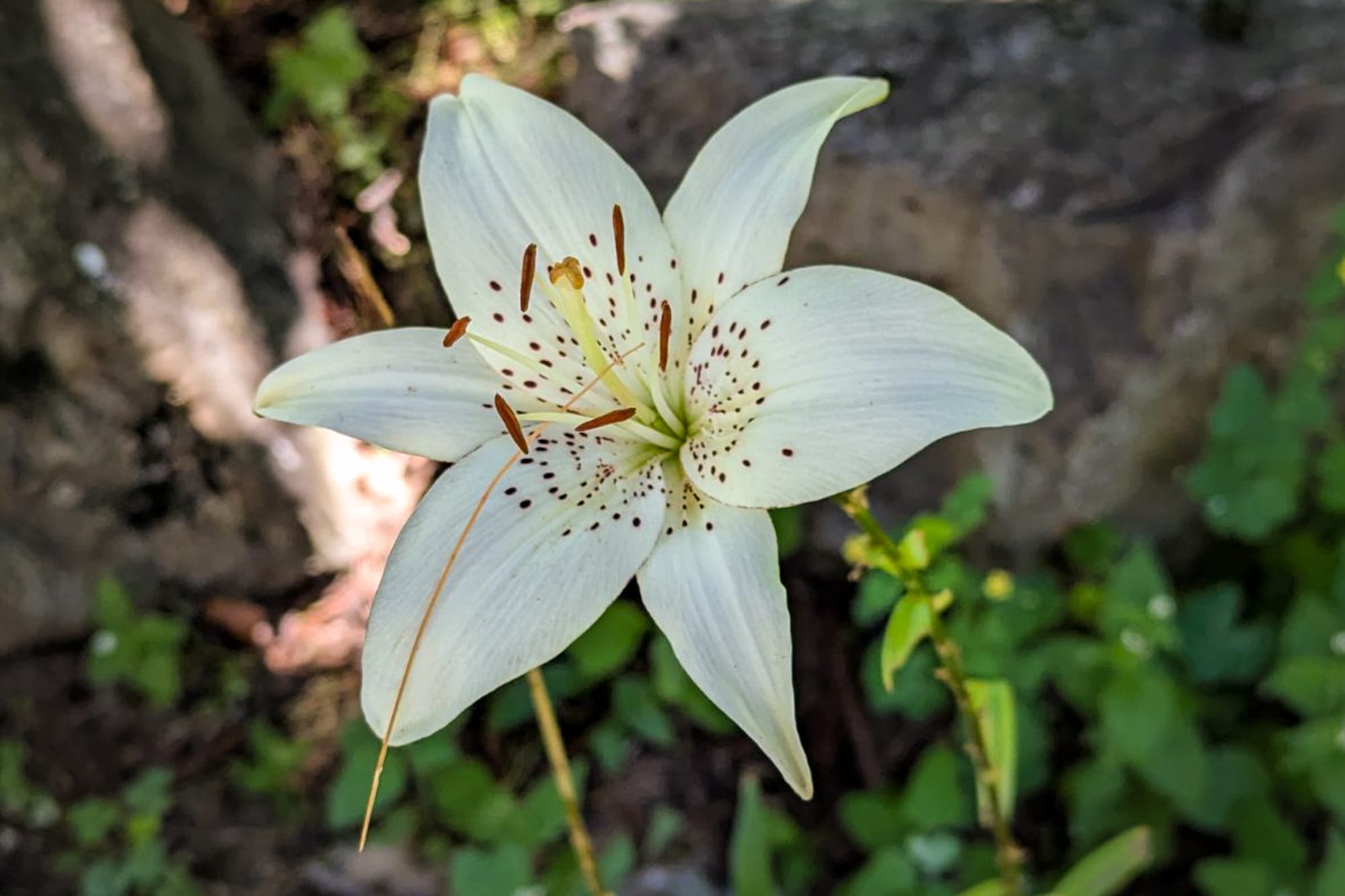
Onward from talk of pests now! Let’s talk blooms! My swamp verbena is now fully blooming, and they are just so delicately purple and lovely–and my bees love it! My true white lilies are blooming in the perennial bed, as well as our fall flox! The hollyhocks, hydrangeas, and rudbeckia are still showing beautiful displays of flowers all around the yard. I love having a wide mix of flowering plants, so we can enjoy the blooms from springtime through Fall. More importantly? Having different flowering plants throughout the season gives more food sources to pollinators!
Some final notes: the weather ahead at least looks slightly cooler, but still warm. I see some possibility of rain, but I would be unsurprised if this changes. Keep up with watering; you can do it! This Saturday, July 18th, the The Garden Conservancy Open Days tours are going on right here in Nashua! There are a few locations, including The Big Little Garden, and require tickets.
The Nashua Farmers’ Crew is now back from vacation! Come on down if you need gardening supplies, or just some advice!
Kate Ratta is the manager of the local feed store Nashua Farmers' Exchange, Inc. She has more than 10 years of experience working in the business owned by her aunt and uncle, Judy Ratta-Harrington and Gene Harrington, and will be contributing weekly garden reports. The store is located at 38½ Bridge Street in Nashua in the converted Boston & Maine and Concord Railroad station.