
The sun is a-shinin’ and it has finally cooled off a bit. As I said last week, I struggle with hot temperatures, so I am so thankful for this reprieve–and I think the gardens are too. Between the rain, I managed to get out in the veggie bed and prune tomatoes and tomatillos, I got everything tied to their supports and gave the veggies a good weeding. I went down each row and squished all the Colorado Potato Beetle larvae and egg masses I could find (and let me tell you, their larvae are gross). I then reapplied my spinosid spray. I gotta say, I can’t believe I’m only seeing them on my tomatillos and not tomato plants…hopefully I haven’t jinxed anything. We have our squashes sprouting, as well as little baby cucumber plants.
On Sunday, I got to tour my aunt’s gardens in Londonderry. We talked about how small land features can create very different climate conditions. A squash plant planted at the top of a slight incline is struggling with sun damage, while another squash plant only a few feet away, but ever-so slightly lower, is thriving. This seemed to be the theme of our tour. As my aunt told me, sometimes you have to move a plant–even slightly–for it to be much happier. Though, this advice is more applicable for your perennials, not your annuals and veggies.
Before we parted ways, my aunt also advised that I give everything a healthy watering, even with the coming rainstorms. With conditions being so dry, it makes it difficult for plants to uptake water. Knowing that the forecasted storm on Tuesday was predicted to have some pelting rain, and about an inch worth of water, prepping by watering will aid plants in both getting a good drink, as well as withstanding heavy rain. Sounds counterintuitive, right? What can I say, watering is an artform, and one that can be tricky to master.
On tomato plants, I have heard some reports of disease. They sound like more of a leaf spot disease, but early blight is certainly possible. I took a close look at some of the low leaves on my plants, and I believe I see some of the early signs. I will be applying a fungicide to slow the disease enough to enjoy a good harvest. Once your plant has a disease like leaf spot or blight, you can’t cure it, but you can help control it. If you don’t have any signs of disease, make sure you keep up with your preventative sprays of organic fungicides. It makes a big difference!
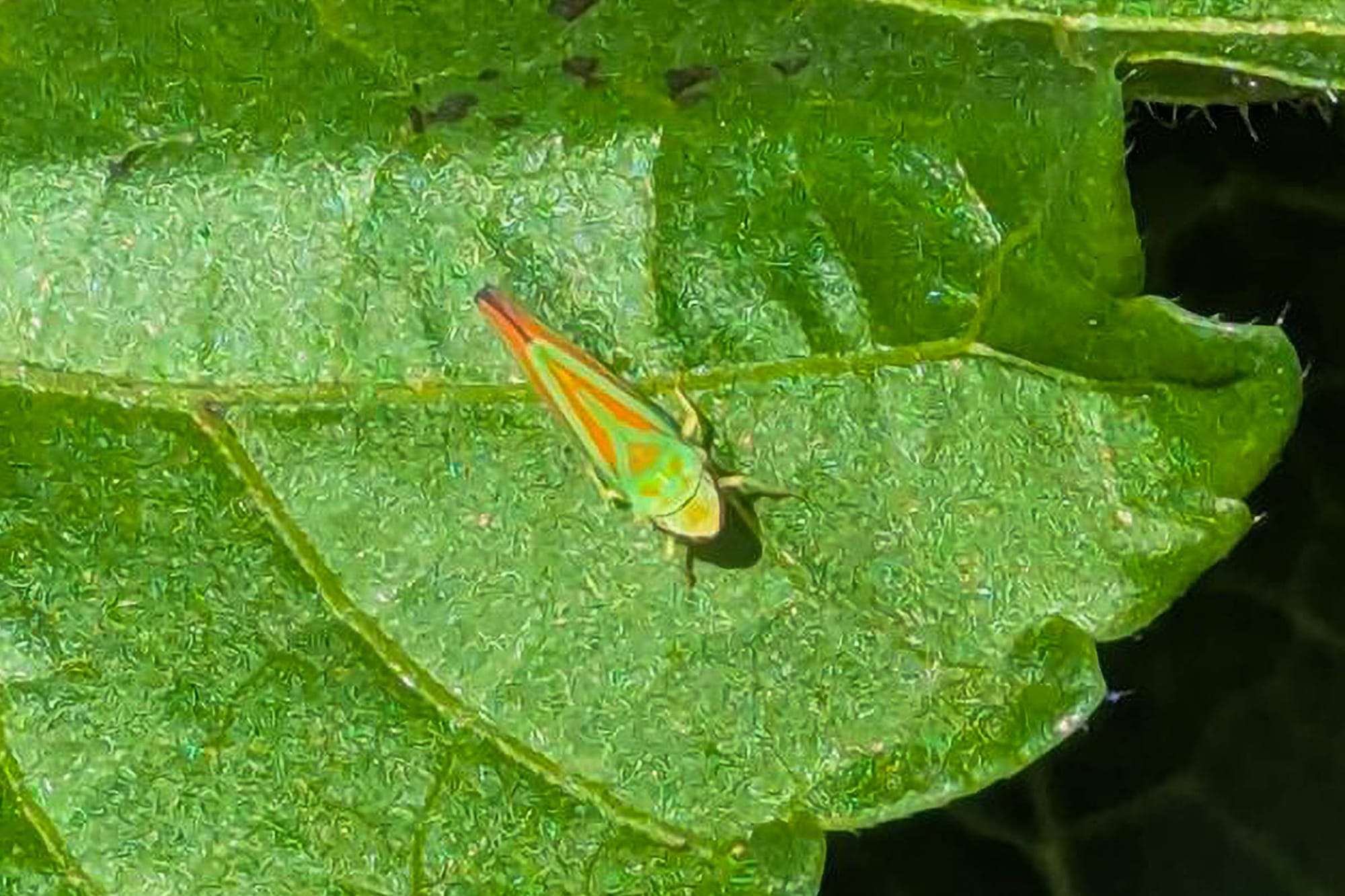
My burgundy okra is growing slower than I would like at the moment. I’m hoping it will pick up the pace soon, but I am considering giving it an extra application of liquid fertilizer to give it some oomph. I’m still seeing chewing damage on its foliage, and I spotted a leaf hopper perched on one plant. Sigh. We’ll get ‘em, fear not!
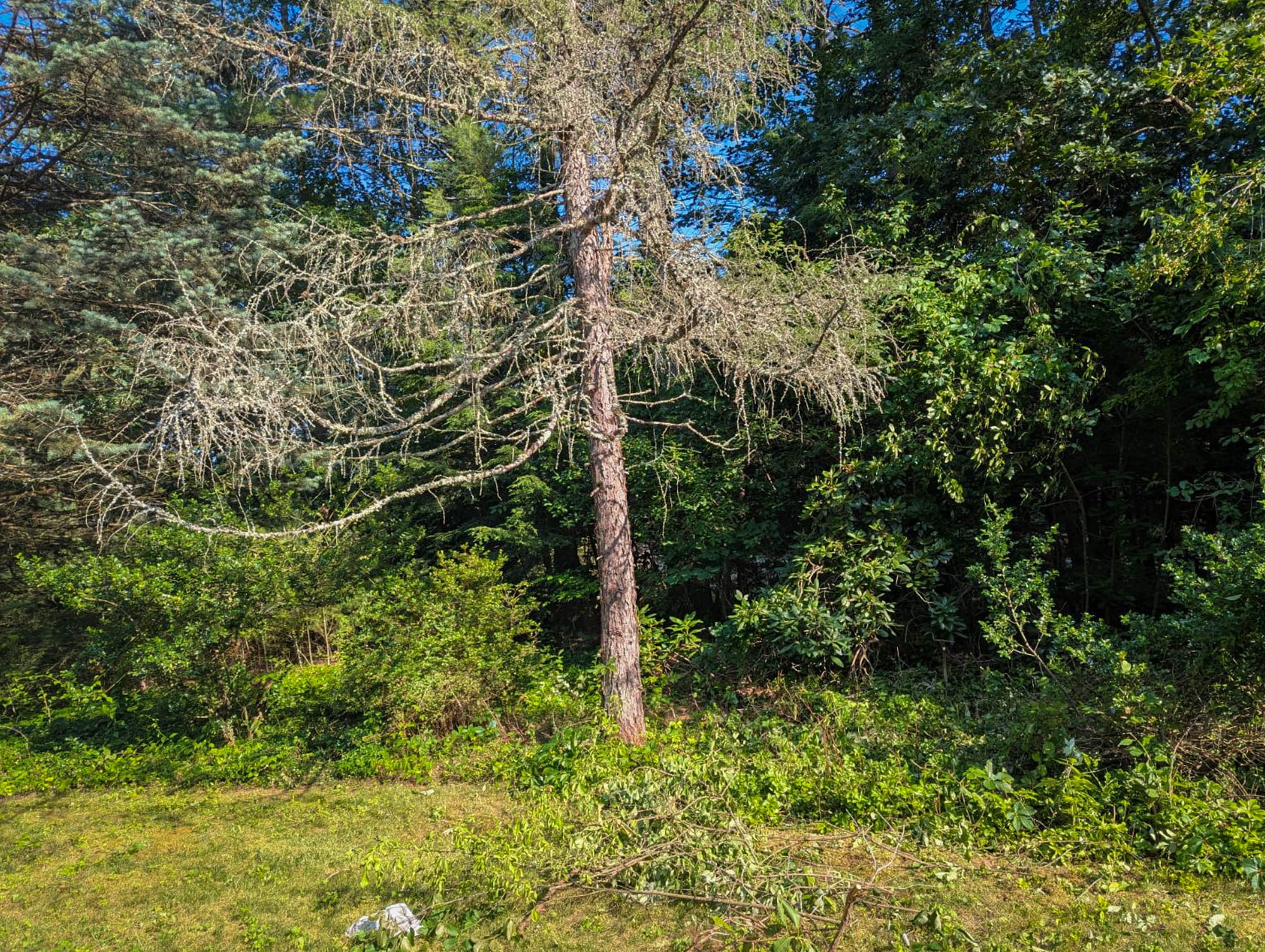
Since I’m on vacation and it’s not 90 degrees out, I’m able to take on some of the bigger projects at my house. We have some very overgrown areas. Riddled with bittersweet trying to take down our larch tree, and surrounding shrubs, I’m feeling ready to tackle this garden. I took out a lot of brush, vines, and various prickers. Between my shrub trimmer, hand pruners, and loppers, I pruned out some dead branches on holly bushes and rhododendrons.
For highly invasive and aggressive vines like bittersweet, I use Cut Vine to get rid of this destructive pest. I use this very, very cautiously and responsibly, as Cut Vine is not an organic solution. This product is painted directly onto the cut, thus staying localized (no drifting spray), and it doesn’t have a residual effect.
While this garden bed still looks rough, I’m happy with what I’ve gotten done so far–the pictures say a lot! There’s a lot more to do, but I’m celebrating the victory of starting this project. I had a small scare whilst dragging my brush pile into our compost area in the woods!
A rather large beetle with impressively long antenna crossed my path and landed on a branch. I believe it is a whitespotted pine sawyer beetle. According to the UMASS Extension Service, this native insect is considered only a secondary pest. It typically feeds on stressed or dying trees. But let me tell you, this guy is pretty big, and I might have let out a small “eeeeeekkkk!” of surprise (or panic) when it flew by. The lesson in this is don’t panic when you see bugs and just spray haphazardly. Some insects are not harmful at all or are actually beneifical–confirm your pest before you reach for those spray bottles.
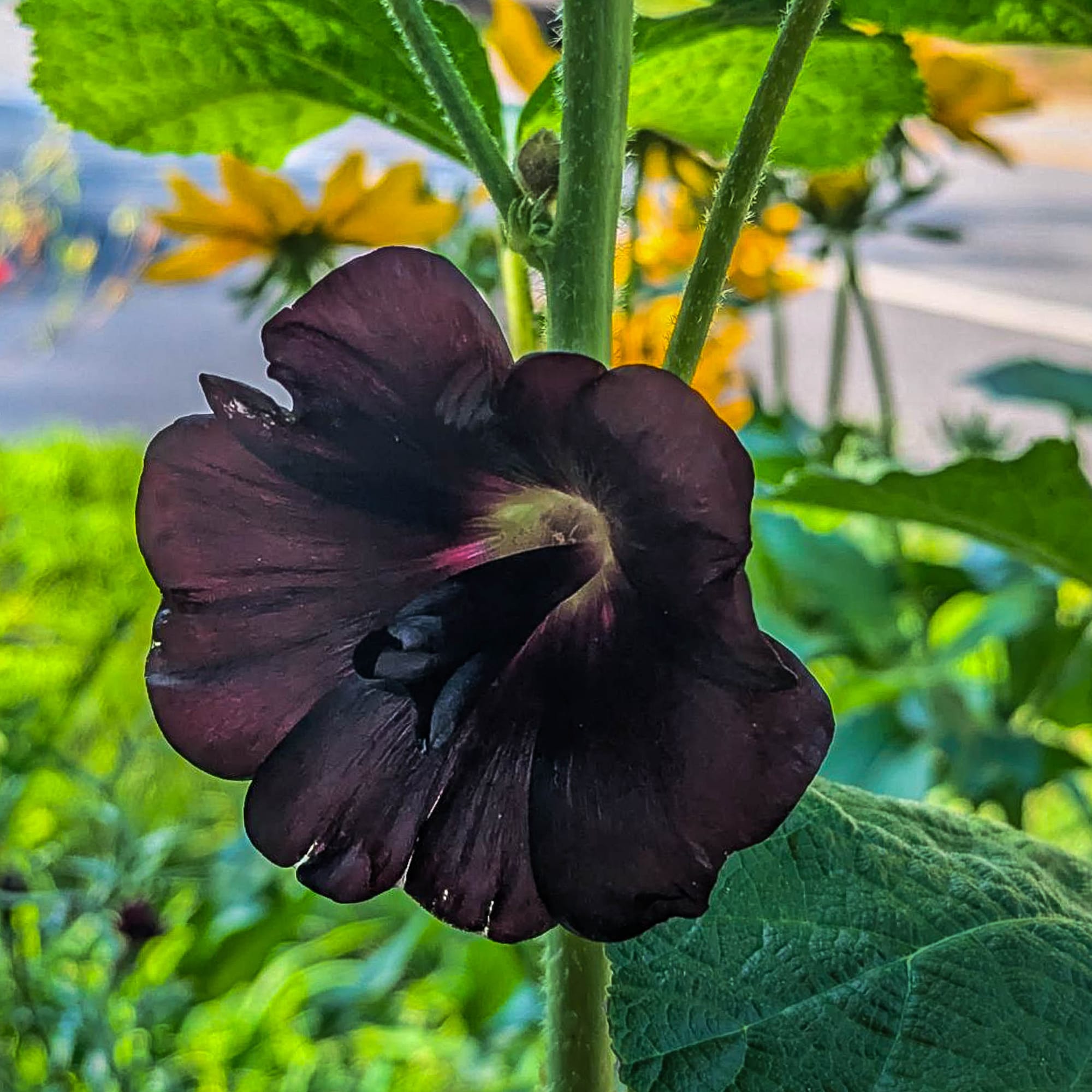
Now blooming is my hollyhock! I had a Black Watchman Hollyhock surprise me in our mailbox garden. It seeded itself from last year, and I spied a hidden blossom. Beautiful! Such a deep purple, the bloom is nearly black. This plant has a lot of buds, and I can’t wait to see what they do! My swamp verbena, a native plant that I planted a couple months ago, is starting to show its delicate blooms as well. Still seeing rudbeckia, hydrangea, and geum. My spigella is starting to go by, but I’m hopeful for a second bloom!
Some last notes: be sure to keep an eye out for pests like squash bug, asaitic garden beetle, squash vine borer, among others. It looks like we are in for more dry weather, so keep an eye on the watering!
Don’t forget, if you’re looking for some local gardening events, The Big Little Garden in Nashua is participating in the The Garden Conservancy Open Days tour on July 18th! Get your tickets here. There will also be a plant sale to benefit Kitty Angels Rescue & Shelter!
The Nashua Farmers’ crew will be back from vacation this Wednesday (July 15th). See you there!
Kate Ratta is the manager of the local feed store Nashua Farmers' Exchange, Inc. She has more than 10 years of experience working in the business owned by her aunt and uncle, Judy Ratta-Harrington and Gene Harrington, and will be contributing weekly garden reports. The store is located at 38½ Bridge Street in Nashua in the converted Boston & Maine and Concord Railroad station.