Submitted by the Board of Directors, Friends of the Nashua Police Department Mounted Unit
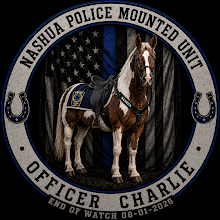
This past week, the Nashua Police Department Mounted Unit said goodbye to one of its founding members, Officer Charlie, following a diagnosis of irreversible kidney failure. For those who rode him, cared for him and watched the Mounted Unit grow around him, his loss came far sooner than any of us expected.
Charlie served with the Mounted Unit for only a relatively short chapter of his life, but his impact on the program and the community was significant. He helped establish what Nashua's Mounted Unit could be—not simply another public safety resource, but a way of creating connections between police officers and the people they serve.
That was precisely the type of horse Capt. Jennifer Moriarty was looking for when Charlie was selected for the new unit.
Before coming to Nashua, Charlie had been a pulling horse, competing at state and local fairs. His experience meant that crowds, noise and chaotic environments were familiar to him. He also came from a family with young children who adored him and would climb all over him whenever given the opportunity.
"From the moment I met Charlie, he was one of the kindest, most gentle souls that I have ever met," Moriarty recalled. "I knew that it would take a very special horse to be a new ambassador for our community."
His demeanor around children was particularly important. Combined with his experience at fairs, it gave Moriarty confidence that Charlie possessed the temperament necessary for police work. That assessment was reinforced during the months of training that followed.
"He never ceased to amaze us with what he would put up with as far as noise, strange objects and exposure to new environments," Moriarty said. "He was always willing to please."
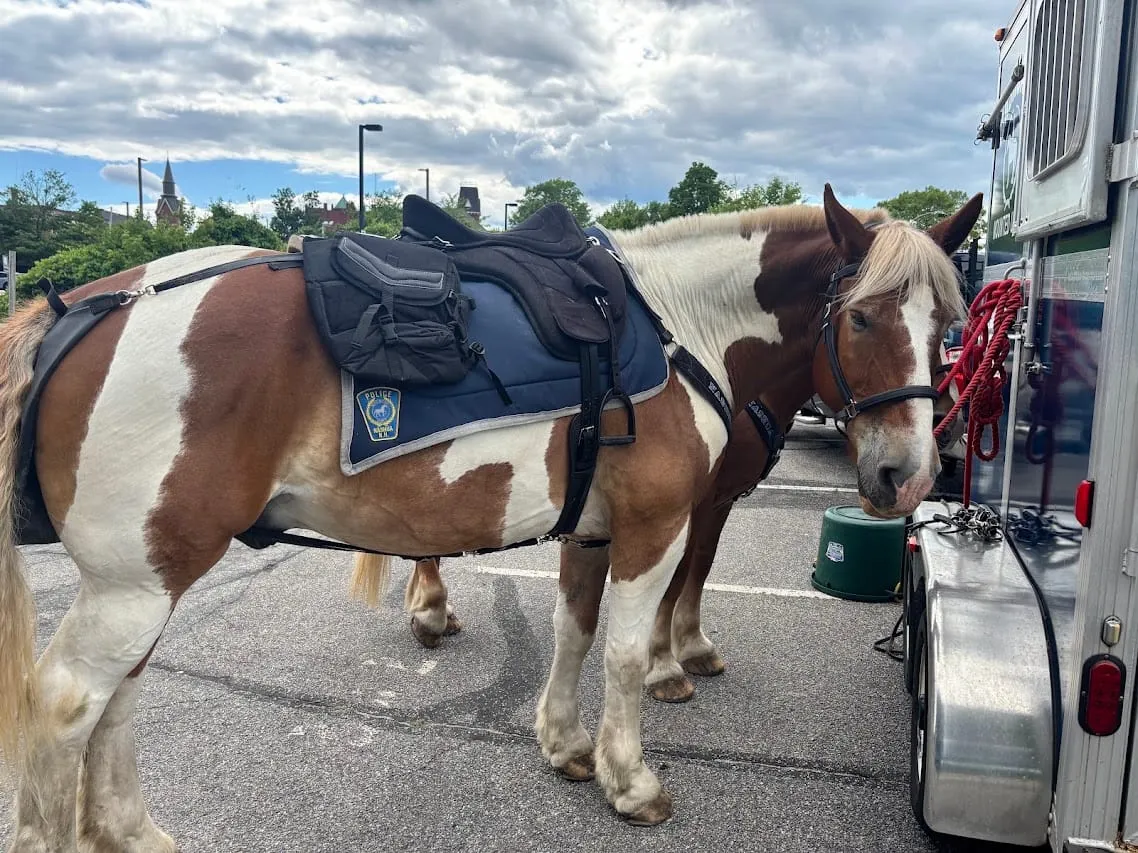
Once Charlie began patrolling Nashua alongside Officers Haley Paulay, Katie Finn and Lauren Colletti, another part of his value became apparent. At nearly 17 hands tall, he could initially be intimidating. Yet the same people who hesitated to approach him often ended up reluctant to leave.
Colletti described him as a "big teddy bear" who was loving and patient despite his imposing size. She remembers watching people move from being nervous about approaching him to being unable to stop petting him.
For Finn, that ability was part of what made Charlie such an effective member of the Mounted Unit.
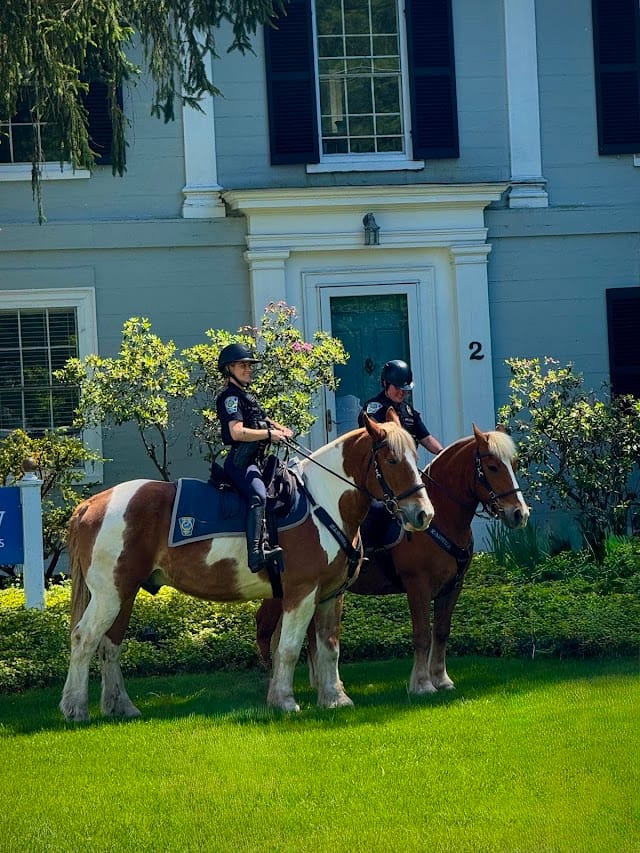
"He was so patient and kind to everyone he met," she recalled. "He welcomed everyone on the street to come say hello, even people who were nervous to meet horses or maybe didn't want to talk with law enforcement. Charlie's kind spirit would calm everyone and let them open up to us for a conversation."
That may be Charlie's most important legacy.
Mounted units have an obvious operational purpose. Horses give officers visibility, mobility and a unique presence in crowds and at large public events. But their value can also be found in the much smaller interactions they create. A person who might never walk up to a police cruiser will walk across the street to meet a horse. A child who may be apprehensive around a uniformed officer will ask to pet one. A conversation begins that otherwise might never have occurred.
Charlie was exceptionally good at creating those moments.
Of course, those who worked with him also knew that beneath his calm police demeanor was a horse with plenty of personality.
Paulay remembers Charlie as "an old soul who always held it together even when he was unsure of things." Some of her favorite memories are not of major events, but of quiet moments—riding down an empty Main Street at 3 a.m. or watching Fourth of July fireworks from Charlie's back. On one bitterly cold patrol, the officers attempted to tuck Charlie and fellow Mounted Unit horse Sam into a secluded downtown alley so they could eat a snack out of public view. As Paulay discovered, it is difficult to hide a 17-hand draft horse.
Finn remembers Charlie's remarkable ability to fall asleep almost anywhere—outside PAL, standing on Main Street or in the middle of an event. Colletti remembers his head slowly dropping until he suddenly woke himself up, only to repeat the process a few minutes later.
Those quieter moments extended to the volunteers who cared for Charlie when there was no crowd and no police equipment.
Volunteer Larry Clay remembers working alone in a dark paddock one Friday night. While cleaning, he suddenly felt a warm breath on the back of his neck. Startled, he turned around to find himself nose-to-nose with Charlie, who had silently crossed the paddock simply to visit him.
"He was just coming over to say hi," Clay recalled. "What really impressed me was how absolutely silent he was as he approached. This is my favorite memory of that sweet boy."
Volunteer Chris Toomey's children experienced that same gentleness. Charlie would place his head on their shoulders as they walked with him into his stall to eat.
These memories help explain why Charlie's passing has affected so many people. The community knew a police horse. His riders and volunteers knew the individual behind the badge.
Earlier this summer, changes in Charlie's health led to veterinary testing and the diagnosis of irreversible chronic kidney failure. After consultation with his veterinary team, it became clear that there was no treatment that could reverse the disease. The decision was made to humanely lay Charlie to rest before his condition caused unnecessary suffering. He spent his final days surrounded by the people who had ridden him, cared for him and loved him.
For Moriarty, there is understandable sadness that Charlie's police career was so brief. There is also gratitude that his final chapter was one of service.
"Although it absolutely breaks my heart that we had him for such a short time, living out his last year as a police horse and engaging with our community was the most noble way for him to leave this world," she said.
Charlie came to Nashua at the beginning of something new. He helped a young Mounted Unit establish its identity and demonstrated why a horse can still have an important place in modern policing. His contribution cannot be measured simply by the number of patrols he completed or events he attended. It can also be measured by the people who stopped to talk because he was there, the children who reached up to pet him and the relationships that began with a simple question about the enormous horse standing on a Nashua street.
The Mounted Unit will continue. New horses will join its ranks, new riders will take the reins and the program Charlie helped establish will grow.
But those of us who had the privilege of knowing Charlie will remember the gentle draft horse who transitioned from the pulling ring to police service and, in doing so, became one of Nashua's most recognizable ambassadors.
His watch may have ended, but his contribution to the Nashua Police Mounted Unit will remain part of its story.
End of Watch: August 1, 2026.
The Board of Directors of the Friends of the Nashua Police Department Mounted Unit extends its gratitude to Charlie's riders, volunteers, veterinary team, supporters and members of the community who cared for him and made his final year one defined by service and companionship.