
NASHUA, N.H. — A few hours before Monday’s Board of Education meeting, where a special education reconfiguration plan was on the agenda, a town hall supporting inclusion was held at the Nashua Public Library. The district is considering changes to how students with intensive needs are served in elementary schools.
The event was billed as a “community response to proposed changes that would separate students with disabilities into one school.”
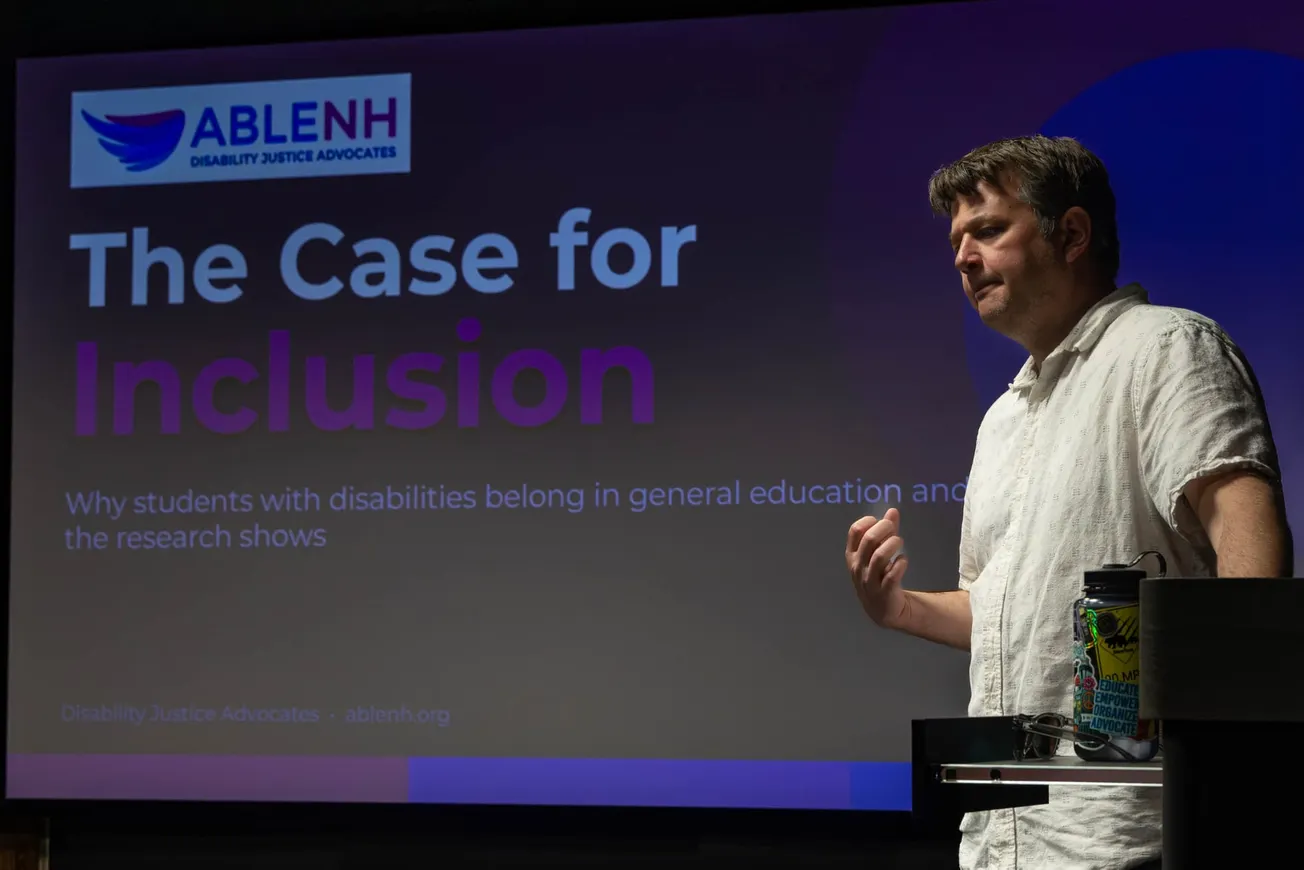
About two dozen disability advocates, family members and students attended to raise concerns about the proposed changes and to hear a presentation by Dr. Louis Esposito, executive director of Able NH.
Esposito described the group’s core worry. “The biggest issue is that we’re firm believers in inclusion, which means students being educated in the general education classroom as often as possible,” he said. “The alarming thing that came out of this was the proposal that had all students from the Nashua School District that were identified as having intensive needs located in one building.”
“They would have been taken from their local community school and brought to one location,” he added. “I understand that there’s a lot of other factors going into it, but fundamentally, it’s just not something we feel is in the best interest of the student.”
Able NH is a nonprofit organization that advocates for the civil and human rights of children and adults with disabilities. The group describes inclusion as students with disabilities learning alongside nondisabled peers in general education, with appropriate support and services built in.
Nashua is not unique in facing resource challenges in meeting its obligation to provide services required under the federal Individuals with Disabilities Education Act, or IDEA.
The law, passed nearly 50 years ago, envisioned the federal government covering 40 percent of special education costs, with states providing most of the balance. Those funding levels have never been fulfilled. Currently, the federal government is providing about 13 percent, the state provides about 10 percent and with majority 75% plus cost falls on cities and towns.
“The goal of IDEA was whatever services and supports the student needs, the school needs to provide it,” Esposito said. “That’s the guarantee. That’s the civil right of it.”
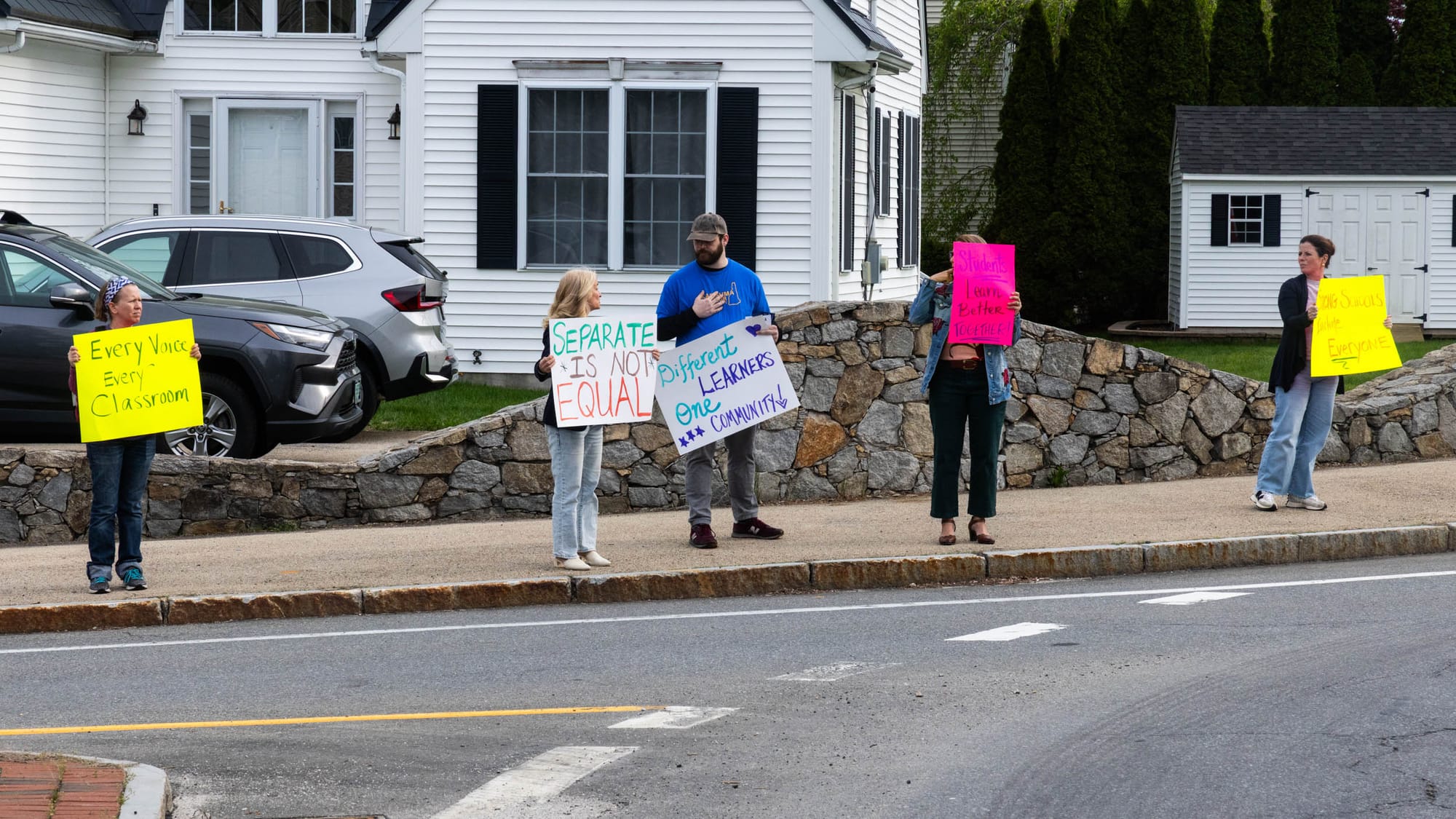
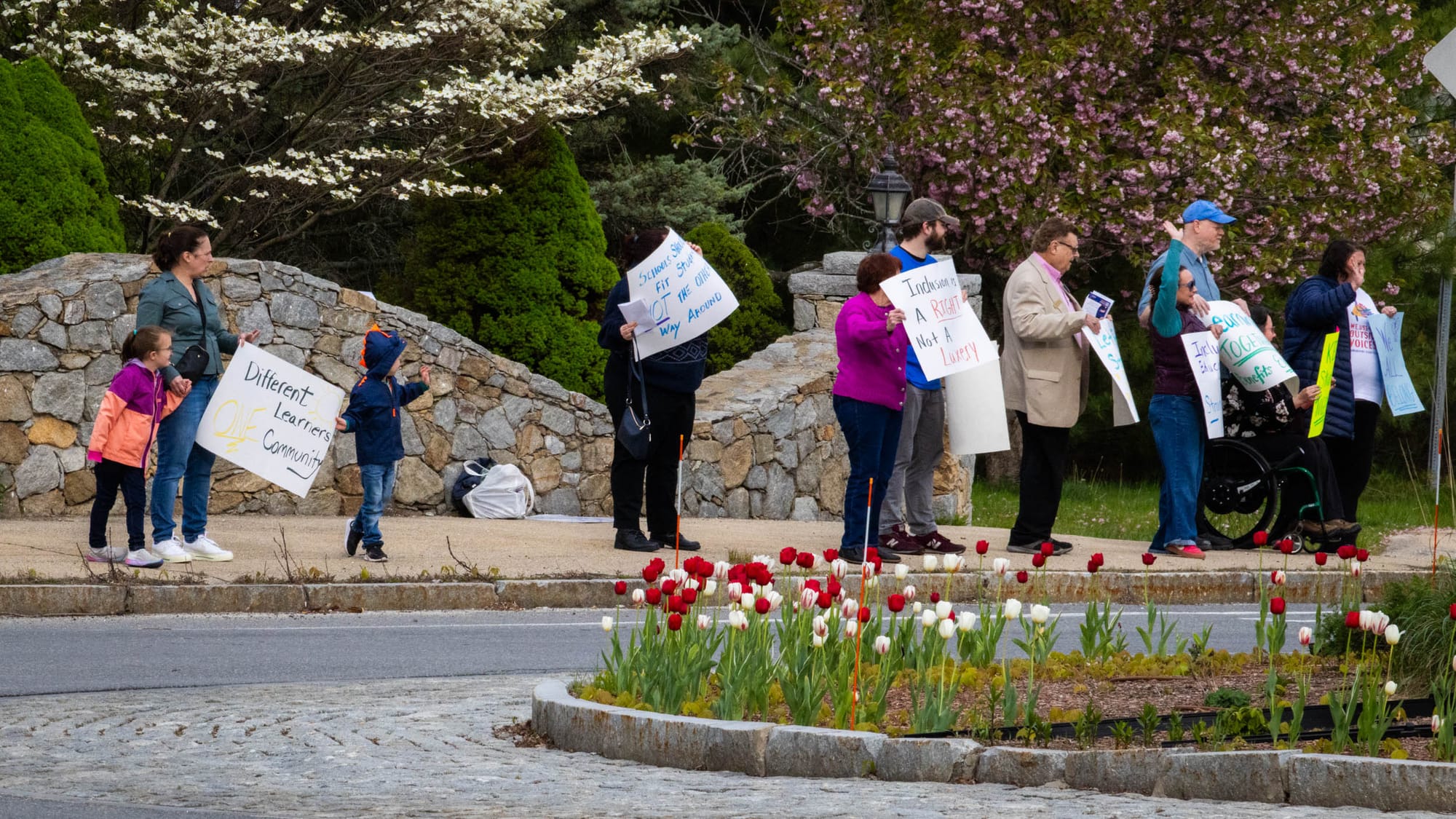
Following the library event, supporters of inclusion gathered at the rotary by the entrance to Nashua High School North to rally support as people arrived for the Board of Education meeting.
“Nashua used to lead the state in inclusive education. We are going backwards,” Esposito said. “And, you know, I’m not going to say it’s going to be cheap, but the long-term costs are going to be fewer and fewer. If we’re supporting kids at younger ages and giving support at younger ages, it benefits them and us as they become adults.”
The Board of Education is expected to continue discussing the reconfiguration plan in coming weeks, and advocates at Monday’s event said they plan to stay engaged as details evolve.