
We are steadily edging closer to late summer. I can already sense the sun is lower in the sky–we’re definitely past its zenith. I’m looking forward to cooler, less humid days ahead!
Remember when I was dancing at the prospect of rain? Well, you might have noticed we got some! My gardens underwent significant downpours, but the wind caused some damage. Earlier this week, I woke up to find one of my tomatillos flattened to the ground. I’m upset, though puzzled. This plant was in the middle of the row (it was the only one flattened); it was staked and tied. When I took a closer look, the pole was still standing straight, but my ties looked like they had been untied. It wasn’t an animal, or the pole would be bent, and there was no trace of animal tracks to be found! Mystery…I’m going to chalk it up to the wind for now. The tomatillo was partially snapped, so I tied it back up on the stake and am hoping for the best.
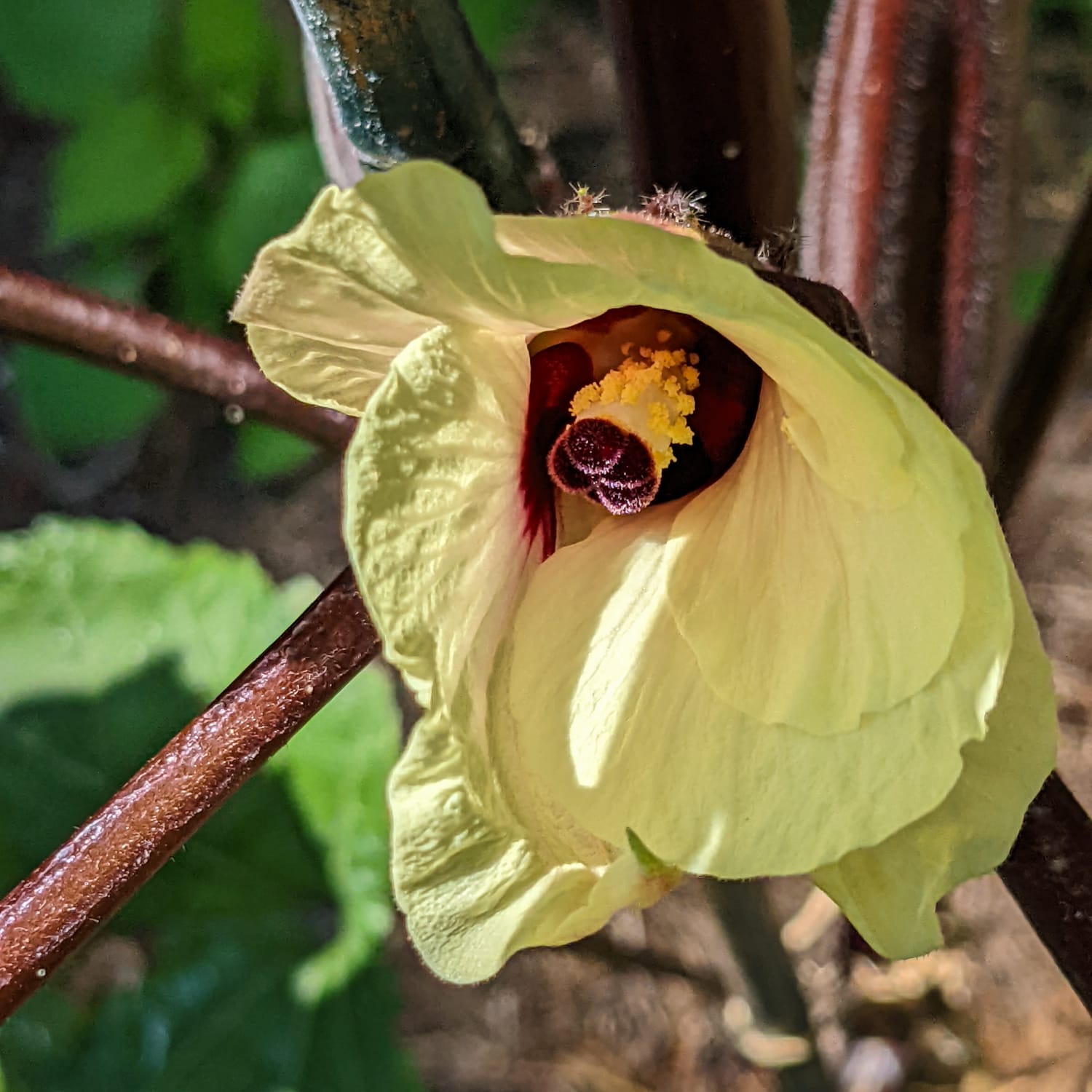
I’m really starting to harvest. I’m picking okra, and their cream-yellow blooms are making their showcase. I’m still picking blueberries as well, and I’m waiting to pull my shallots till it’s a little drier. I mentioned in the last garden report, but I will say it again: if you want to store your shallots or onions, properly drying them is imperative. My tomatillos and tomatoes still need a bit more time to develop and ripen, while my late-planted butternut squash and cucumbers have a ways to go. As a side note: if you’re worried about buying store-bought lettuce and leafy greens, don’t forget you can do a late summer/fall planting!
Moving on to what’s buggin’ us in the garden: with the rain we have gotten, keep an eye out for disease and fungus. Humid weather allows disease to flourish! I’m still working to slow down the blight on my tomatoes, and I have heard customers mention fungus concerns on squash foliage. What has been most concerning to me lately isn’t in the veggie garden. We have a lot of hemlocks in our yard, and they are very susceptible to hemlock wooly adelgid. These insects can do some significant damage and even kill these trees if the infestation is significant.
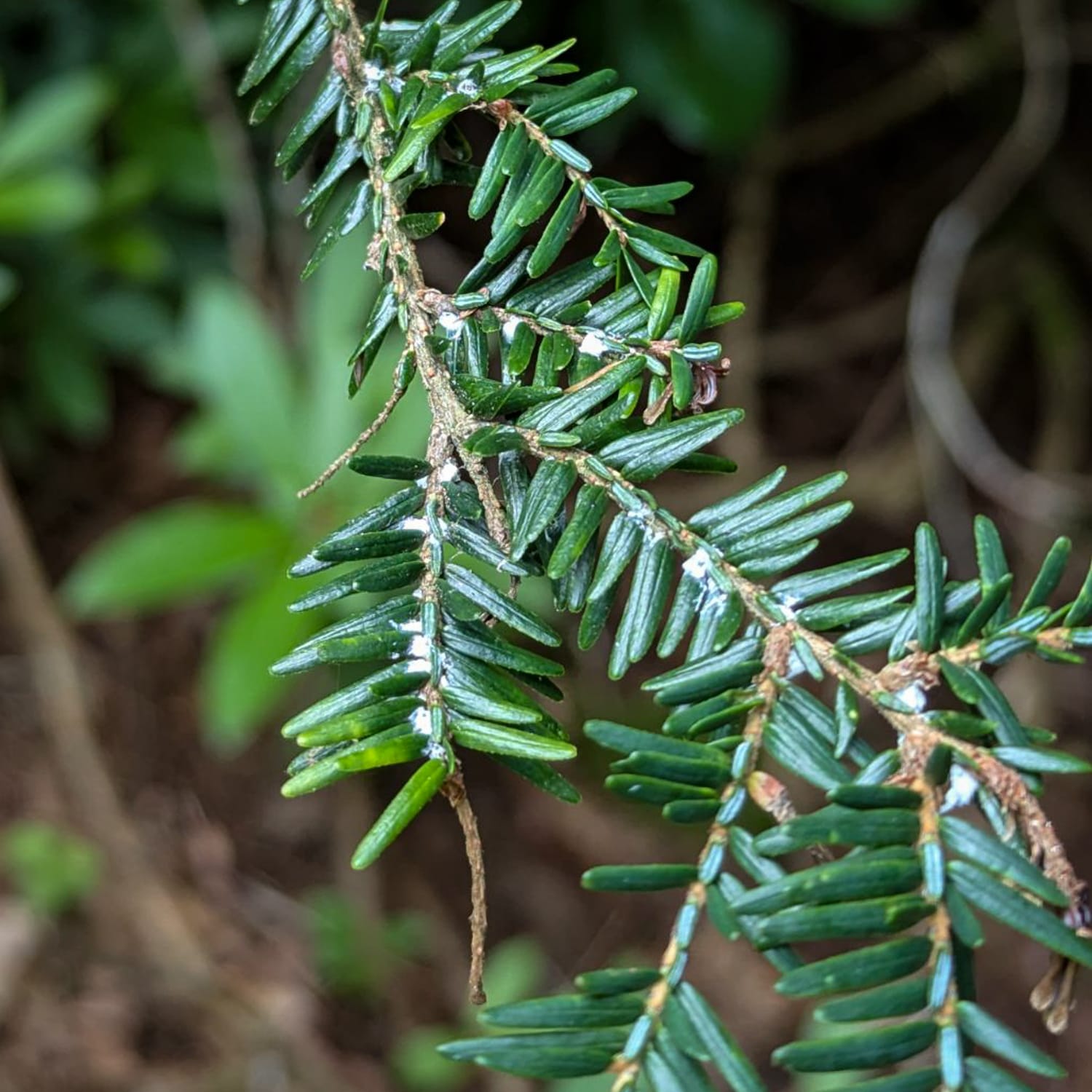
Well, I have seen the adelgid present and injury to these trees. In the agricultural industry, the standard treatment for these insects is chemical treatment. I am very, very hesitant to do this. I haven’t yet decided what to do, but I can see how much these trees are suffering. Sometimes there aren’t easy solutions in the garden but know that it’s okay to take time to decide what to do. If you have concerns like this, make sure you consult with a professional to properly identify issues and appropriate solutions.
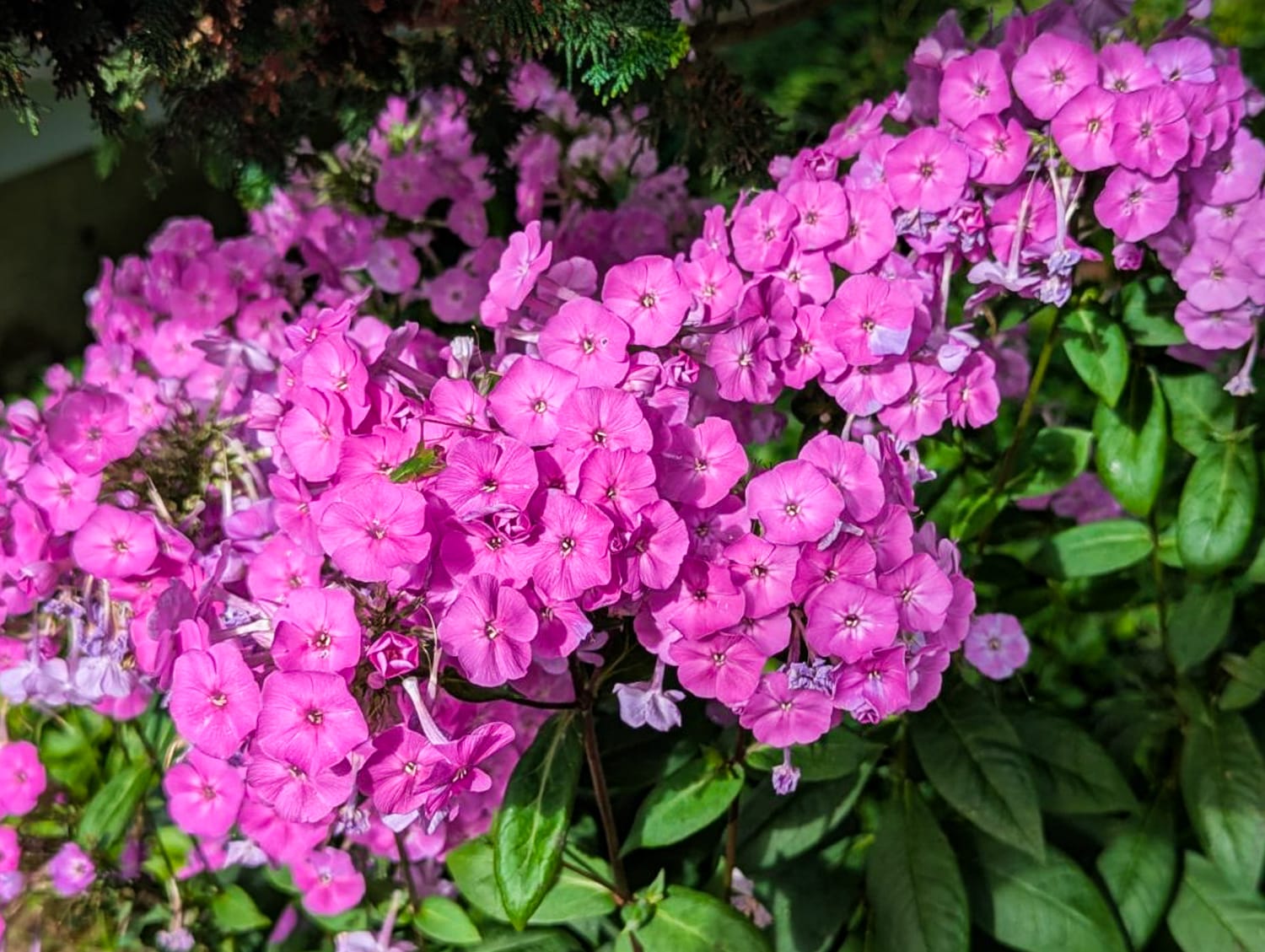
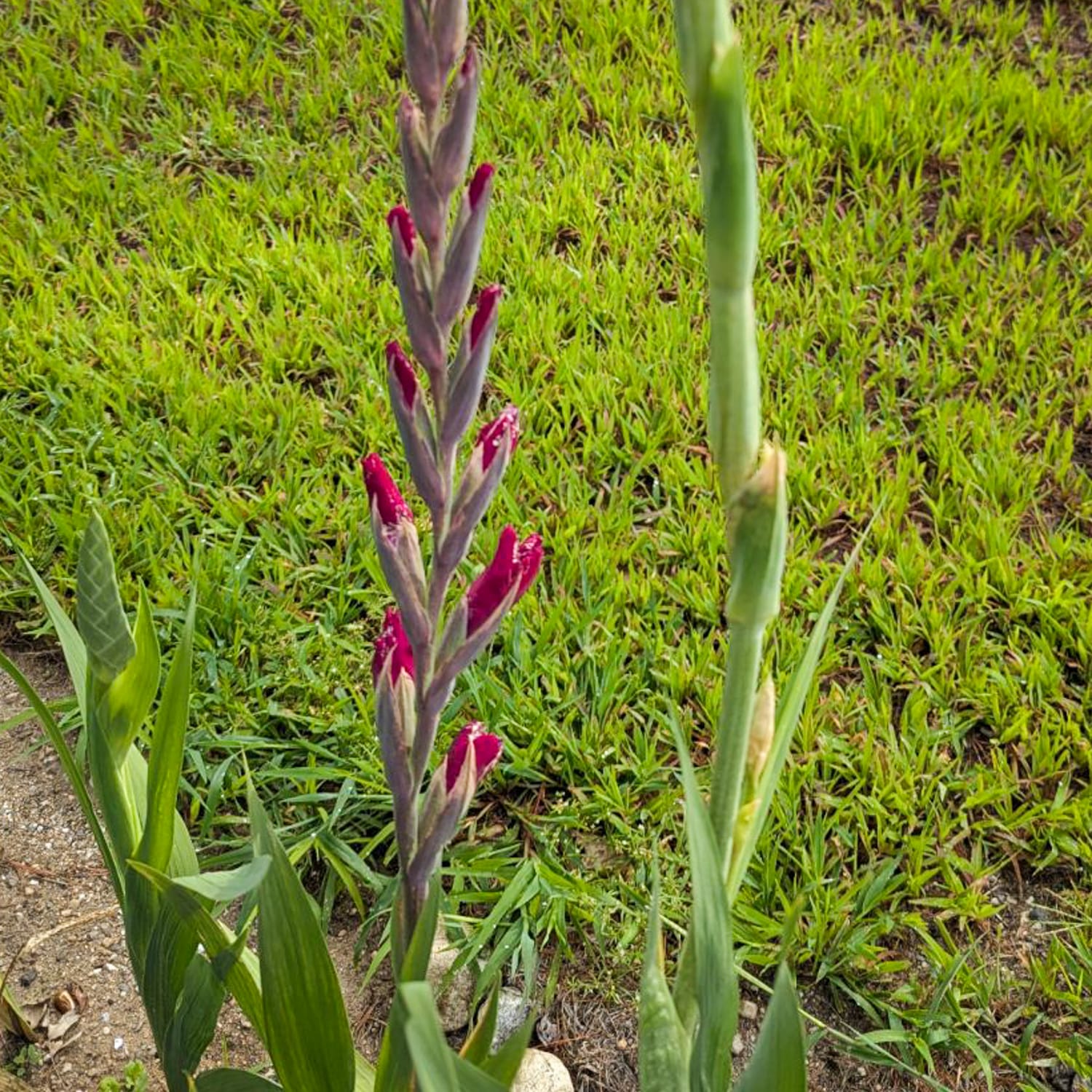
But enough garden worries for now! Let’s talk about what’s blooming. You know I’m thrilled to see my okra’s sweet, yet eye-catching flowers. Our butterfly bush, though it has struggled this year, has pushed out its vivid purple flowers. It’s a welcome sight to see these tall, waving stems burst with color! My daylilies are still going strong, along with my hollyhocks. Around town, cheery-faced sunflowers are greeting all who pass by. My red flame celosias are ramping up, and I’m seeing a flash of pink budding on flamingo feather celosia. What am I most excited for? While my back was turned, my gladiolas finally sent up their flower stems! I am seeing peeks of colors on these cuties.
Before I bid you farewell, a quick note on lawns and turf: we are approaching the best time of year to seed grasses. The third week of August through mid-September is the ideal window to plant, but it is important to do some prep work first!
● If needed, aerate your lawn. This helps to break up compacted soils.
● Thoroughly rake and dethatch the area. I highly suggest doing this after aerating.
● Weed out anything undesirable. Your grass seed wants contact with the mineral soil, so remove obstacles where you can
● Finally, I highly recommend doing a pH test of your soil. We run quite acidic in this area, and grass wants a neutral pH. Apply lime as needed (come talk to us at Nashua Farmers’ Exchange for more information and advice).
That’s it for now! More to come on lawns and what’s growing in the garden next week!
Kate Ratta is the manager of the local feed store Nashua Farmers' Exchange, Inc. She has more than 10 years of experience working in the business owned by her aunt and uncle, Judy Ratta-Harrington and Gene Harrington, and will be contributing weekly garden reports. The store is located at 38½ Bridge Street in Nashua in the converted Boston & Maine and Concord Railroad station.