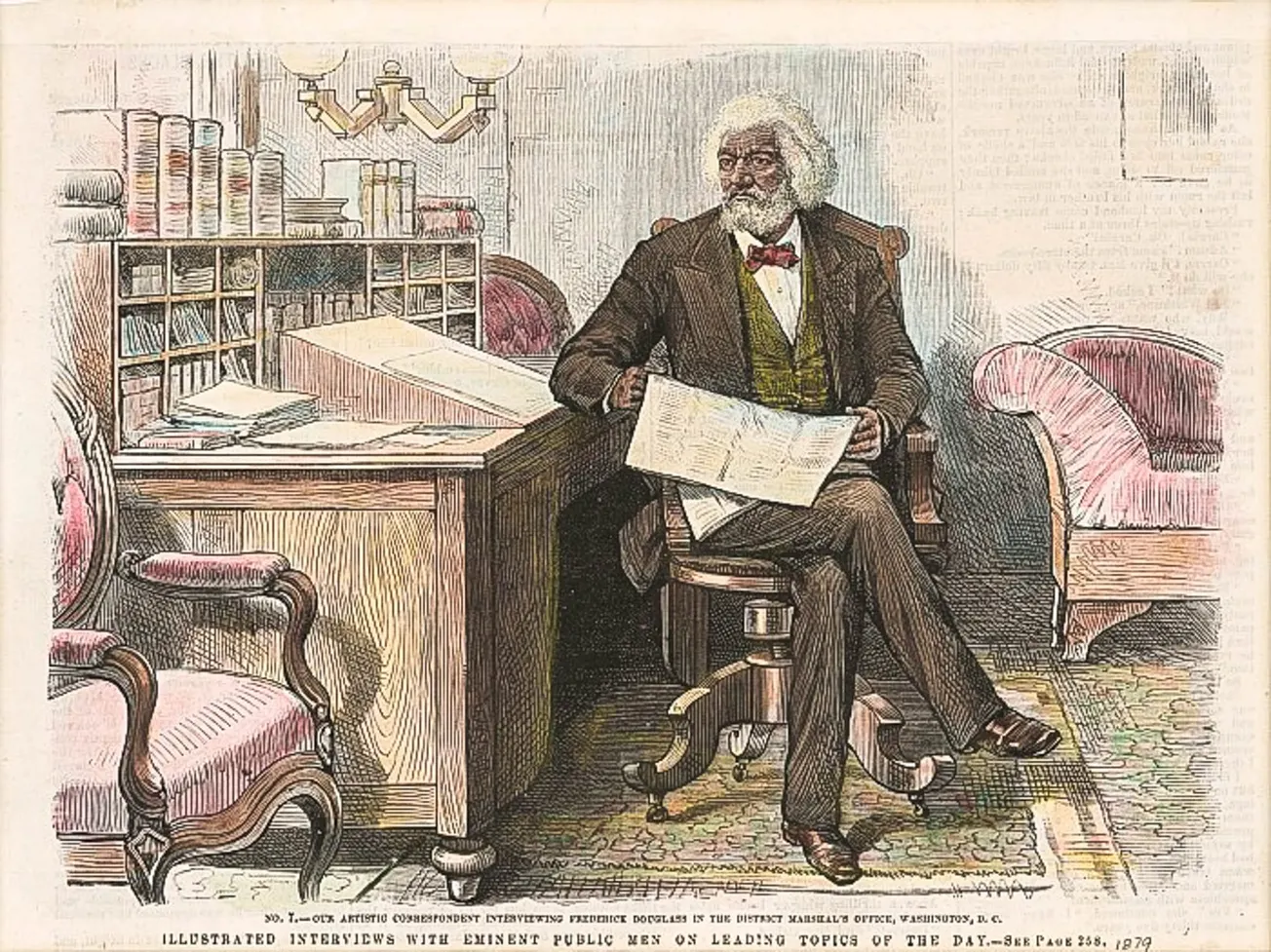
Greater Nashua Area Branch NAACP (GNANAACP) and the New Fellowship Baptist Church (NFBC) invites residents to join us in our 8th annual reading of Frederick Douglas’s 19th century speech 208 years past on Saturday June 27th, 2026, at 12:00 pm, at New Fellowship Baptist Church, 50 ash street, Nashua NH.
Douglass, one of our nation’s greatest orators and abolitionists, was asked to speak at an event in commemorating the signing of the Declaration of Independence.
In his provocative speech, Douglass said, “This Fourth of July is yours, not mine. You may rejoice; I must mourn.” And he asked, “Do you mean, citizens, to mock me, by asking me to speak to-day?”
Douglass’s speech remains emotionally powerful and thought-provoking more than a century and a half after he gave it.
People of all ages and different walks of life are asked to gather at 12:00 pm at the New Fellowship Baptist Church. We will take turns reading parts of the speech until the entire speech has been read.
Community leaders around the country participate in these readings—people such as town officials, teachers and activists, the police and fire chiefs, and heads of key organizations come together with ordinary neighborhood folk.
Reading Frederick Douglass causes us to think in new ways about our nation’s history, affords opportunities to open up discourse about race relations and citizenship, and raises awareness of the role slavery and race continue to play in our history and national discourse.
The abolition of slavery was set in motion in New York state on July 5, 1799. This speech was first given by Douglass on the 5th of July 1852, which was called “Black Man’s Independence Day” because Blacks were not allowed to march in white men’s parades. Their own parades would get disrupted by whites if they tried to march on the 4th of July.
Libraries, churches, historical societies, community service groups, social justice organizations, and schools are encouraged to participate in the reading.
This free public event is a program of the Black Heritage Trail New Hampshire (BHTNH) in collaboration with Greater Nashua Area Branch NAACP, New Fellowship Baptist Church, Hills County Ruff Ryders. The BHTNH mission is to promote awareness and appreciation of African American history and culture in NH by celebrating the resilience, versatility, and courage of African American people that have enabled the culture, values, and traditions to survive for 400 years. BHTNH works to visually honor and celebrate a truer more inclusive history of New Hampshire through exhibits, programs and tours that can change the way our country understands human dignity when it is free of historical stereotypes.